Seed Scavenger Hunt and Learn about Seeds
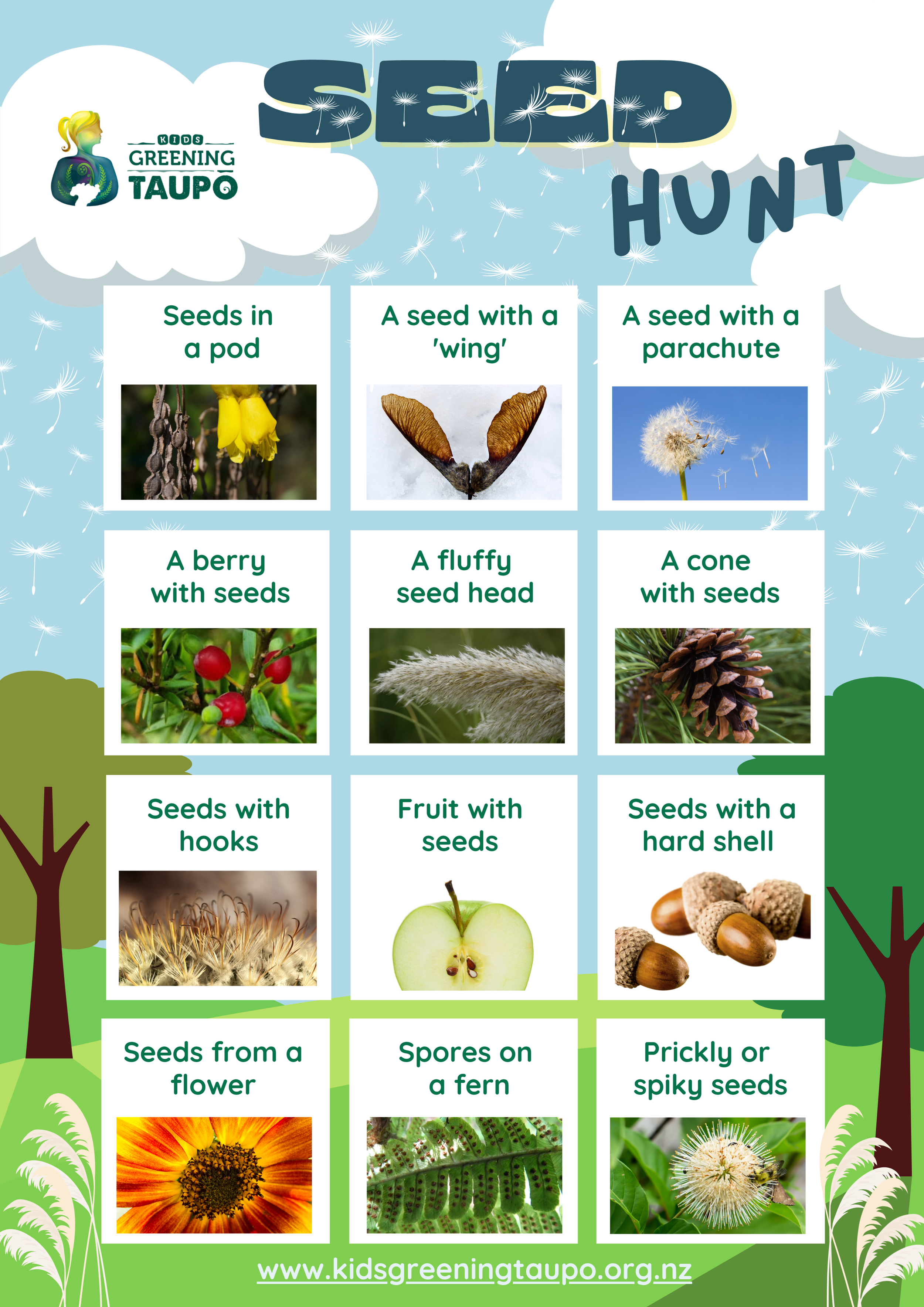
Click on the image to print the PDF

Go on a hunt for seeds!
Note: This is best done in Autumn.
How many different kinds of seeds can you find on a walk around your neighbourhood? Take a bag or basket to collect them in.
Did you know that seeds try to be dispersed (spread to other places) in different ways? Some use the wind and even have little wings or ‘helicopters’ to help them. Some use water and can float. Others use animals to move them. They might do this by having hooks that catch animals’ fur (or your clothes!) or they might be inside something yummy, so that animals will eat them (and then poop them out in a new place). Have a look at the seeds that you collect and think about how they are dispersed. Can you figure it out? If they are eaten, which animals eat them?

Native Seed Hunt
Do you have any native bush around you? If so, see what native seeds you can find. Then try out our quiz for native berries/fruit.Did you know that many of our native berries are only found on female trees? Some of them are edible! We love eating berries from kawakawa, tōtara, rimu, and kahikatea, but our favourite are the kōnini berries from kōtukutuku trees. Remember, some berries can make you sick, so always ensure you have correctly identified berries before eating them.
Common native seeds that you might find, and how they are dispersed:
Akeake have ‘butterfly’ shaped wings and disperse by wind.
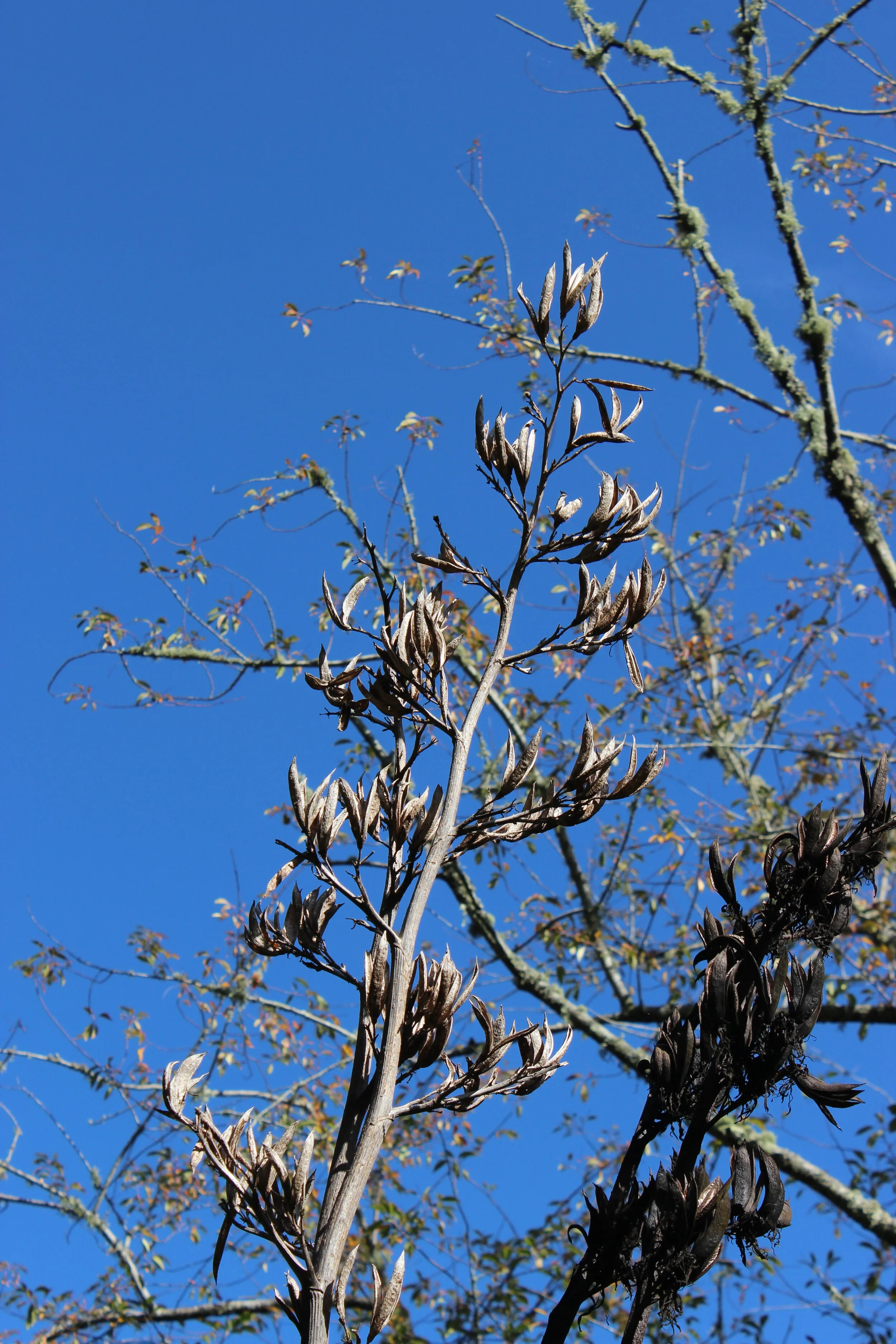
Harakeke seed pods are fun to split open and shake seeds from. They use wind to disperse too.
Karamū and other coprosma species have two seeds inside edible berries. You can squish these open to find them.
Kōwhai trees grow near streams and rivers, their seeds pop out of pods and travel by water!
Toetoe seeds are blown from fluffy seed heads by wind.
Tōtara, rimu, kahikatea and other podocarp species have edible berries with a seed attached to the outside. To get to the berry, birds and bats must eat the seed too. Then they are pooped out to disperse them.
Pittosporum species such as tarata, kōhuhu, rautawhiri, and karo have seed pods full of sticky ‘glue’. Their seeds stick to the feathers of birds and are spread around.
Tīkōuka (cabbage trees) have big sprays of berries with tiny seeds inside. These are eaten and spread by birds and geckos in their poo.
Some big berries such as tawa, karaka, miro, and puriri are spread by kererū, as they are the only native birds left that can swallow the big seeds.
And, lastly, our favourite! Native mistletoe seeds are inside sticky fruit. When birds poop the seeds out, they stick to their backside. Birds then back up to a forked branch and scrape them off their bottom, planting the sticky seeds where they grow - in the branches of other trees!
Watch the videos below to learn more about seeds and how they grow into plants
Biomimicry
Fun fact: Did you know that velcro was invented after a curious man had seeds stick to his socks while on a bushwalk? It’s a fascinating story of perseverance, design, technology and biomimicry (copying nature to invent something for humans). Read more about this invention here or watch the video.