Learn about Whio
*Local Taupō/Tūrangi schools can contact us if they would like us to visit and run a session all about whio. Contact- rachel@greeningtaupo.org.nz
What are Whio?
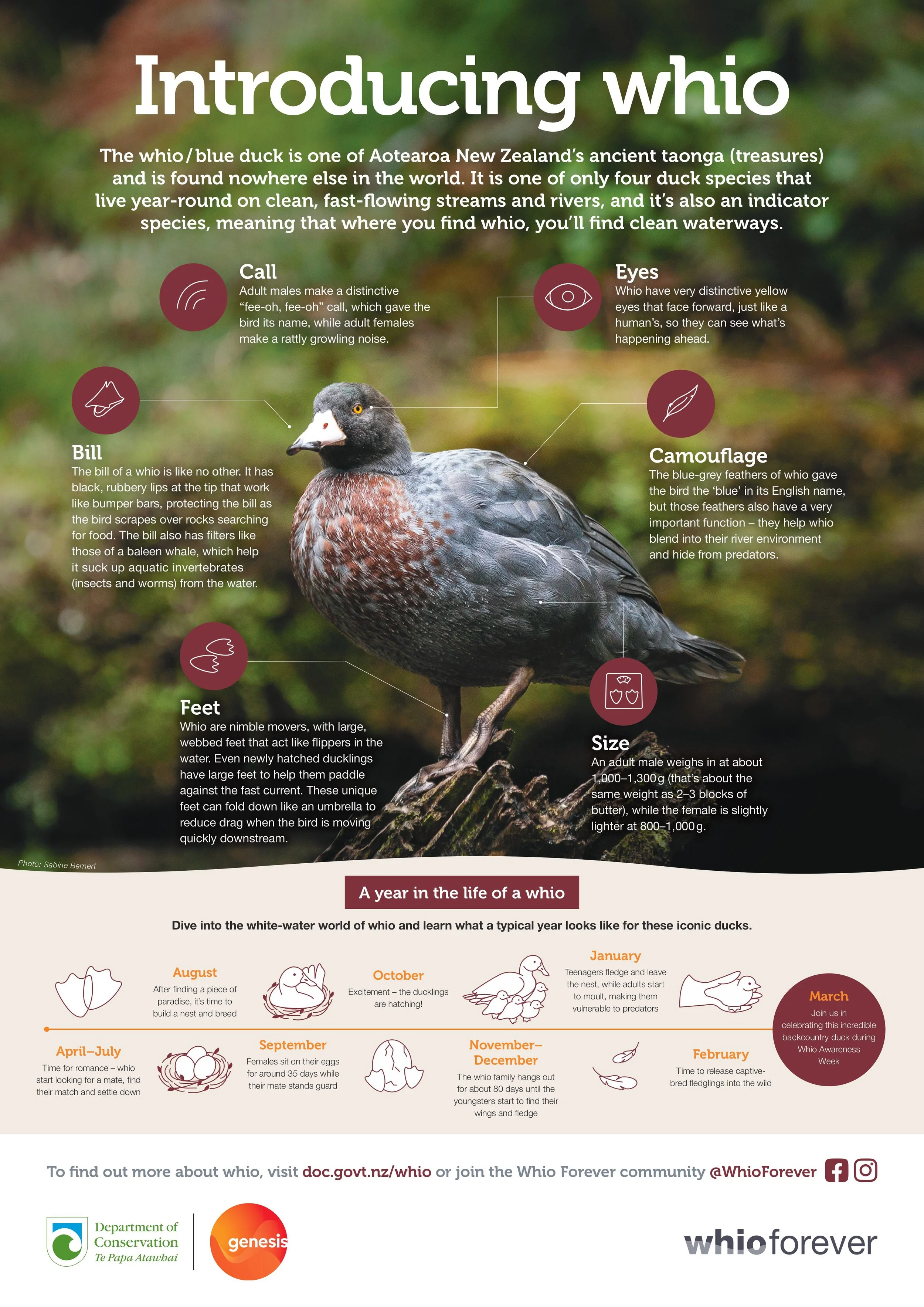
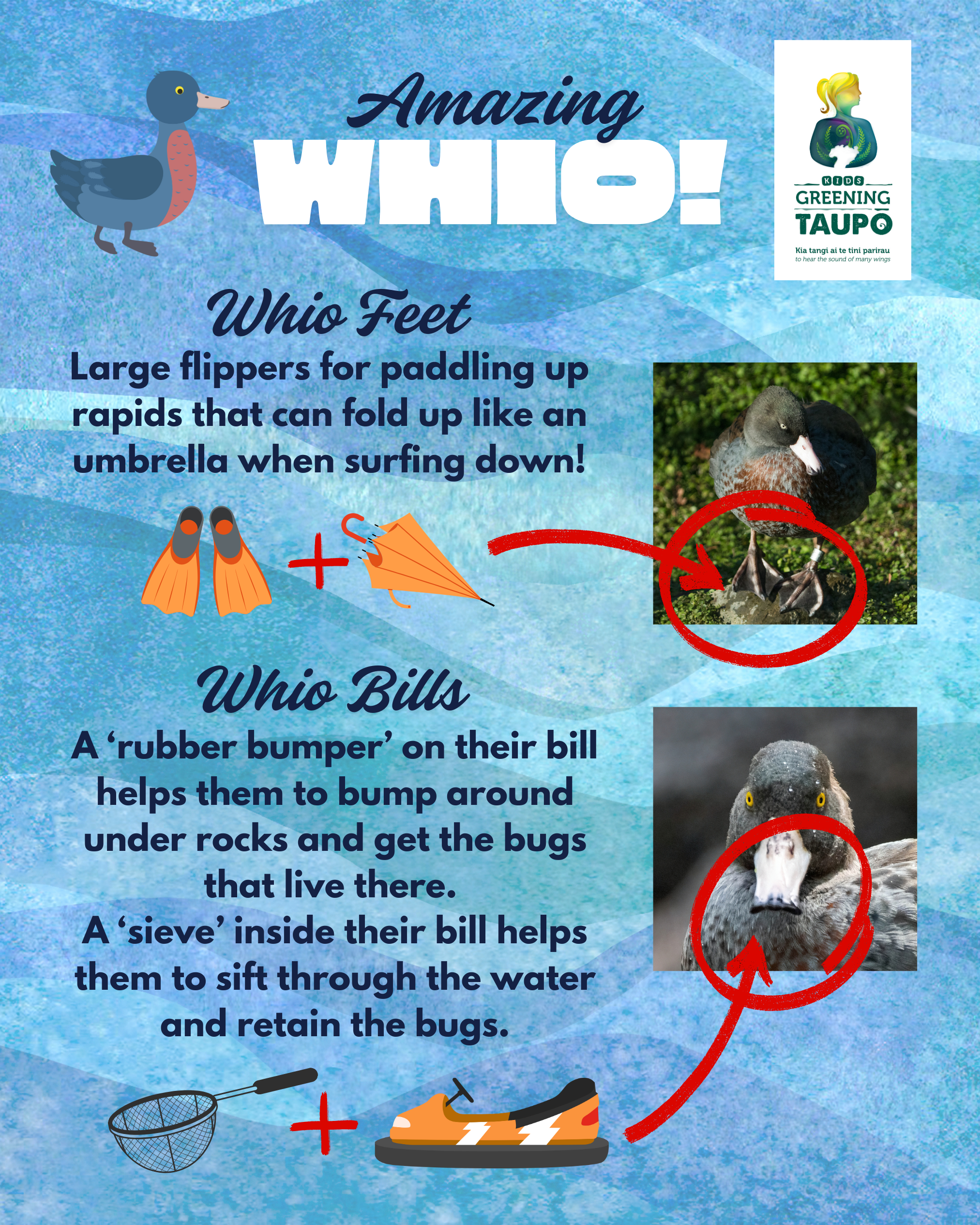
Whio - sometimes called ‘blue ducks’ - are very special birds found only in Aotearoa. One of the few duck species in the world that live in fast flowing rivers, whio have some very cool adaptations to help them survive, like big webbed feet that fold like umbrellas and a rubber bumper on their bill! Whio eat freshwater macroinvertebrates from clean, clear, rocky streams. Their bills have this rubbery ‘bumper’ so that they can dig around under rocks and get bugs that live in the water such as mayfly and stonefly nymphs. Learn more about freshwater macroinvertebrates in our resource here.
Whio are named after the high pitched whistle that the male whio makes. The female does a low rumbly growl. Listen to a whio whistle here! Blue duck/whio song (MP3, 1,342K)
Whio need to be protected!
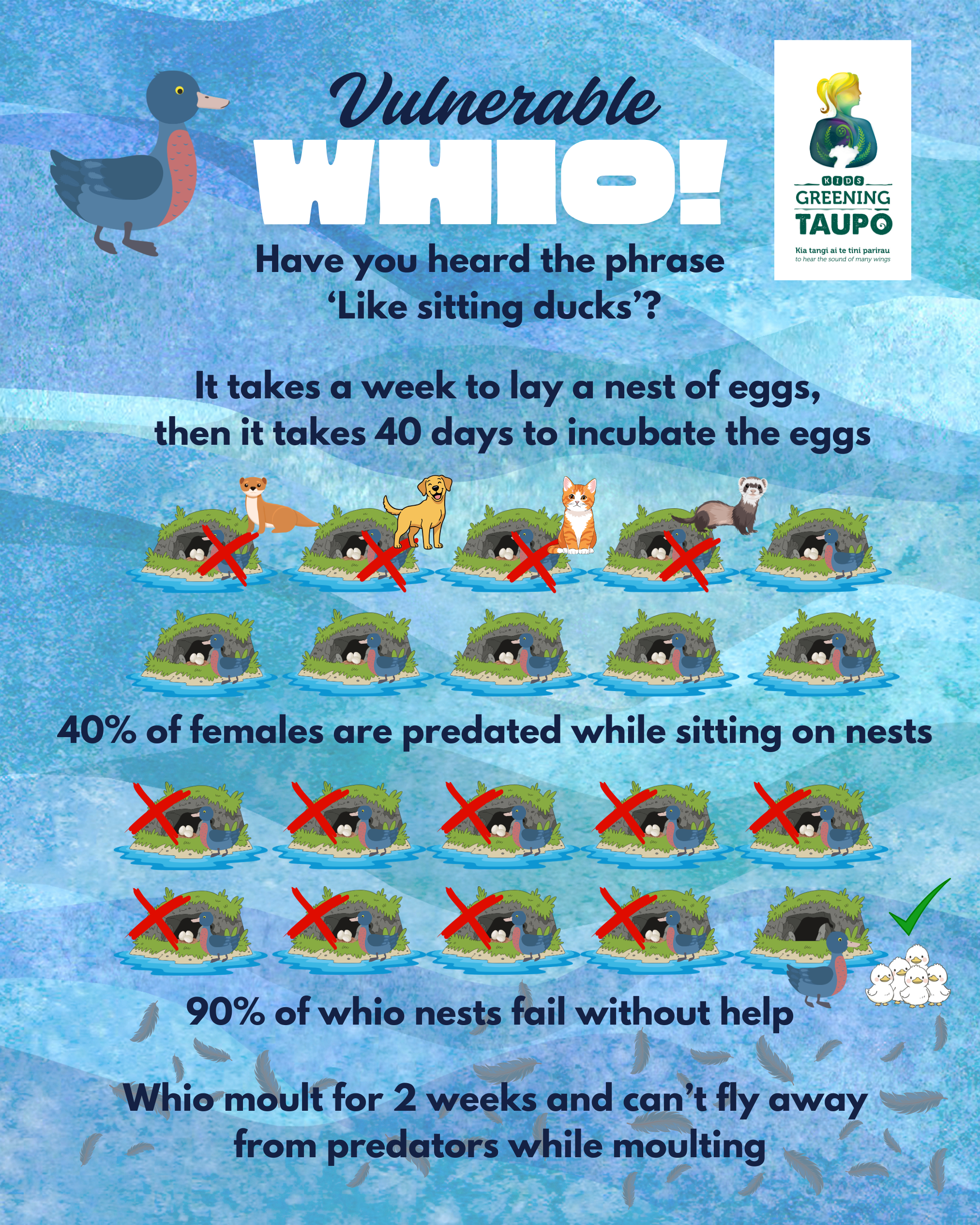
Whio are very endangered, with less than 3000 left, making them 20 times rarer than kiwi! It takes a week for a whio to lay a nest of eggs, then it takes 40 days to incubate the eggs. While sitting on nests females are vulnerable to predators.
When the chicks fledge (leave the nest), the adults moult (lose their feathers and grow new ones). This takes 2-3 weeks, and during this time they can’t fly, so again are vulnerable to predators. They are literally ‘sitting ducks’!
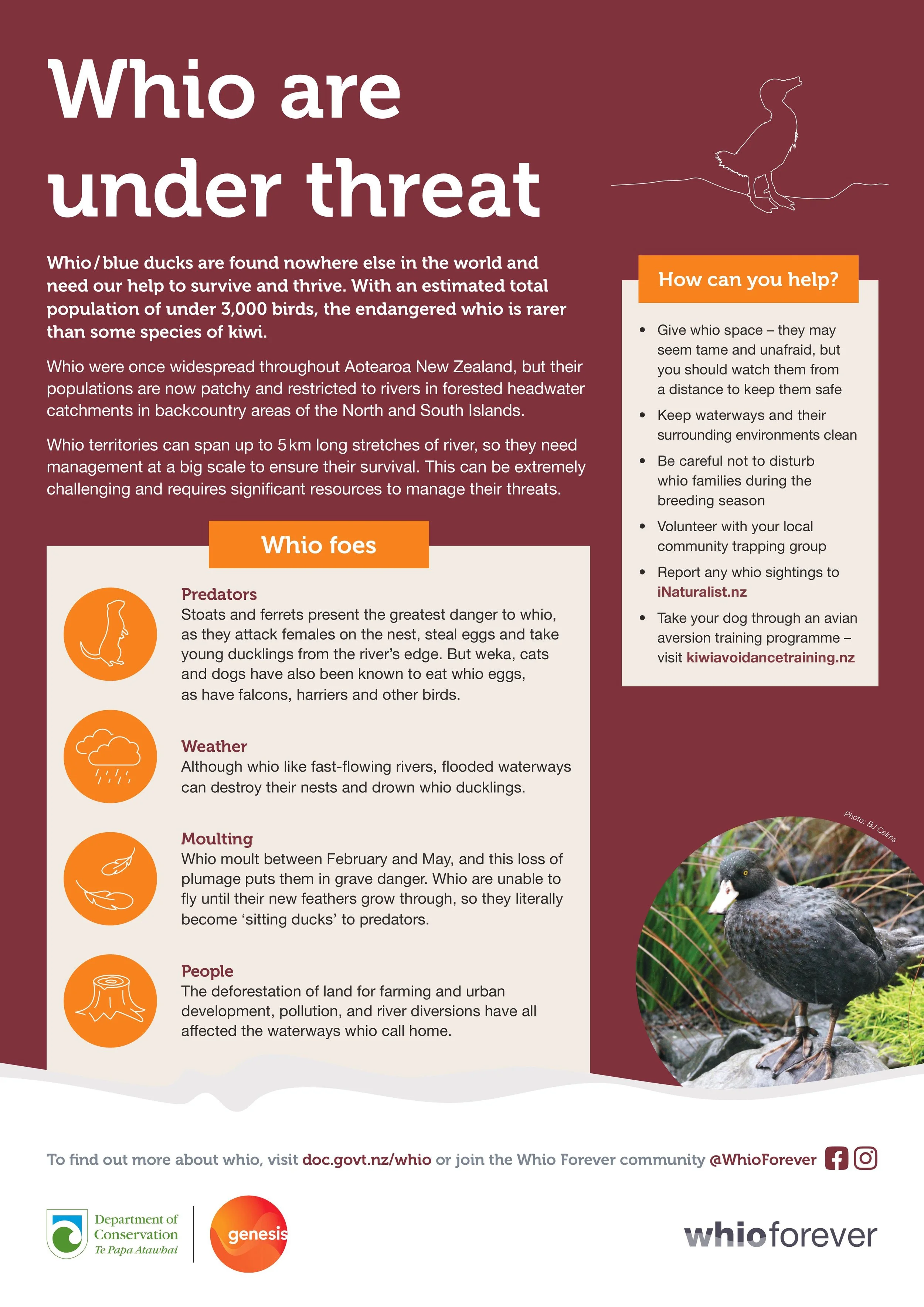
Whio evolved with avian (bird) predators that hunted with their eyes, so they use camouflage to hide - and they do have great camouflage in rocky rivers! Unfortunately, this doesn’t work for introduced mammalian predators that use smell to hunt. Their main predators are stoats and ferrets, but dogs and cats can predate whio too. Rats, possums, and hedgehogs may eat their chicks and eggs too.
Climate change is leading to some pretty crazy weather events and this affects whio too. Floods can wash away nests and slips can destroy their habitat.
How can you help?
You could set a backyard trap, or volunteer to check a local trapline to help protect birds such as whio.
If you have a dog - Always keep your dog on a lead if you are in an area with vulnerable native birds. If there are signs saying ‘No Dogs’, do not take your dog into the area. If possible, have your dog avian aversion trained.
If you have a cat - Try to keep your cat inside at night. Make sure that your cat is de-sexed and microchipped. Keep it well-fed and get a colourful colour with a bell. You could even make a catio! Learn lots more ideas for cats here.
Spread the word and tell others about these amazing birds
Help keep rivers and streams clean, clear, and cool
Only let rain water go down storm water grates, never pour other things down there. Wash your car and boat onto the grass.
Check Clean Dry all gear between waterways to keep invasive species out of whio territory.
Never drop litter, as it will eventually find its way into our waterways
Organise a stream clean up with friends!
Plant native trees along waterways and help restore wetlands. Foliage along waterways helps to keep water cool and clean. It also helps to prevent erosion and provides habitat for invertebrates (food for whio).
AWesome Resources From Whio Forever/DOC
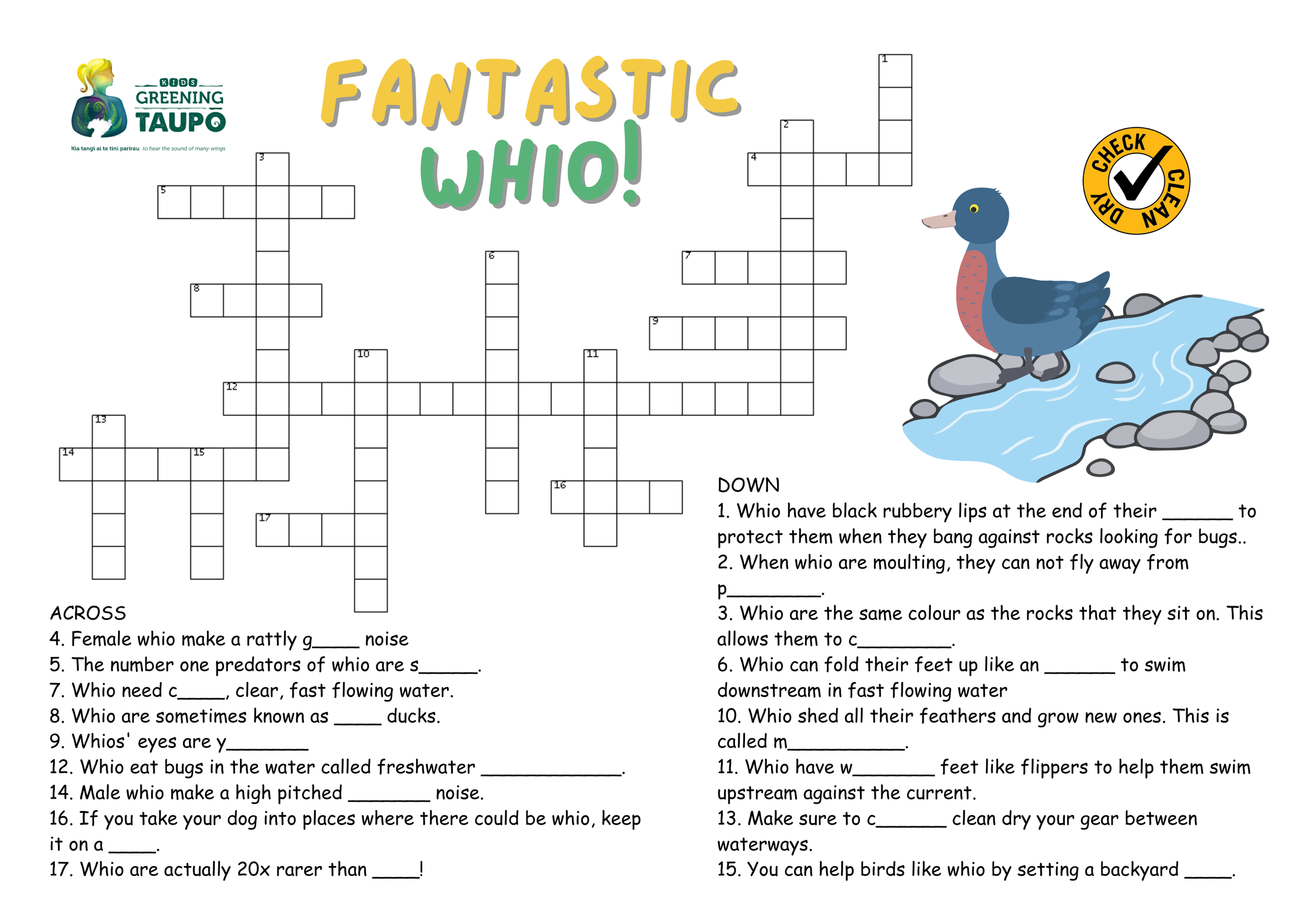
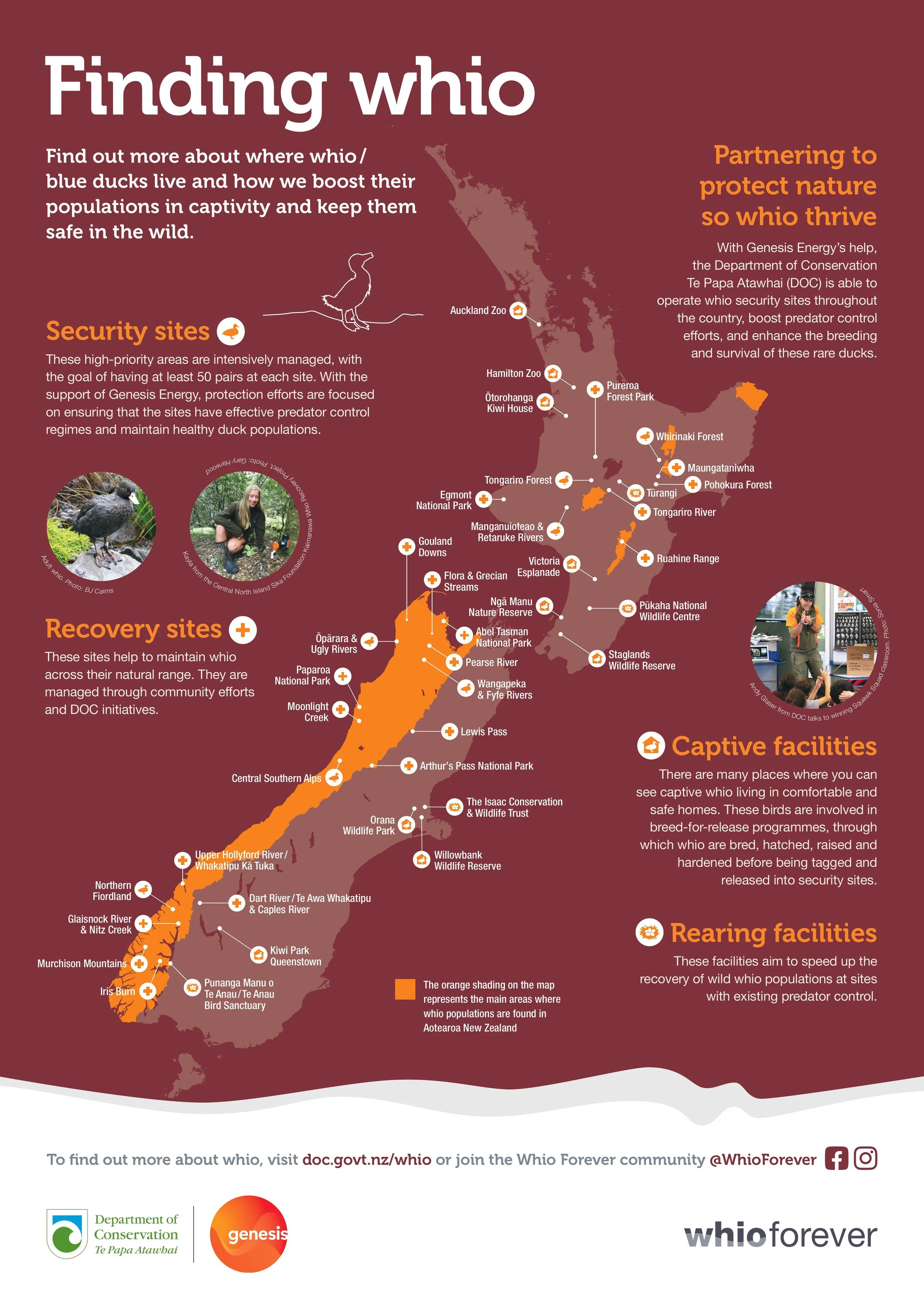
Whio Forever and DOC have put out lots of awesome resources, including art/craft activities, an online game, posters and brochures. Check them out below. Also, check out our crossword puzzle.
Listen to a whio whistle here! Blue duck/whio song (MP3, 1,342K)
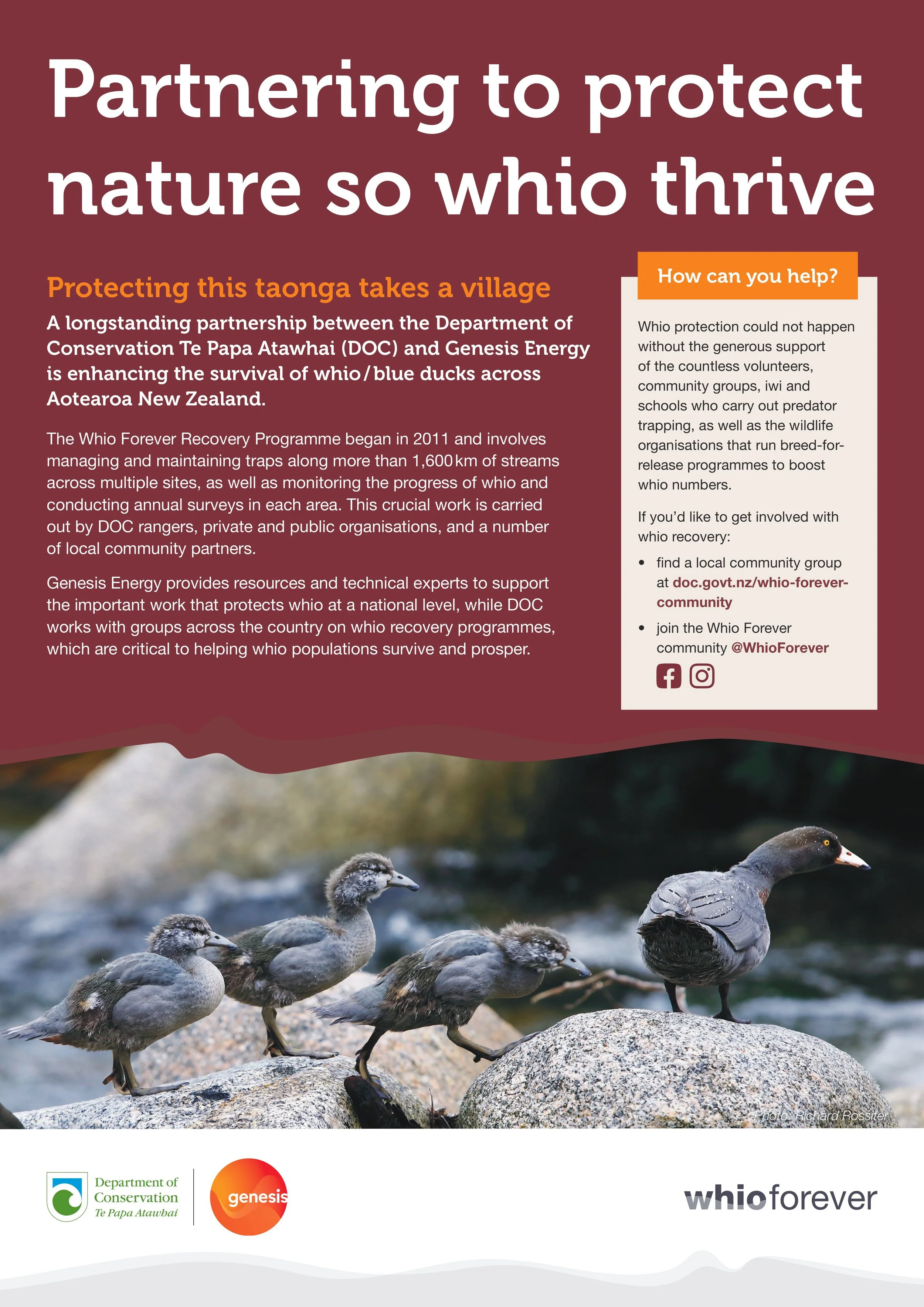
Information posters PDF (as seen below)
Video showing adaptations (from Science Learning Hub)
Fun Whio Facts (from Predator Free NZ)
Colouring and Craft
Online game
Posters
Introducing whio (PDF, 3,342K) | Te whakamōhio i te whio (PDF, 380K)
Partnering to protect nature so whio thrive (PDF, 1,169K) | E mahi ngātahi ana ki te whakahaumaru i te taiao kia taurikura ai te whio (PDF, 114K)
Whio are under threat (PDF, 691K) | E whakaraerae ana te whio (91K)
Brochure