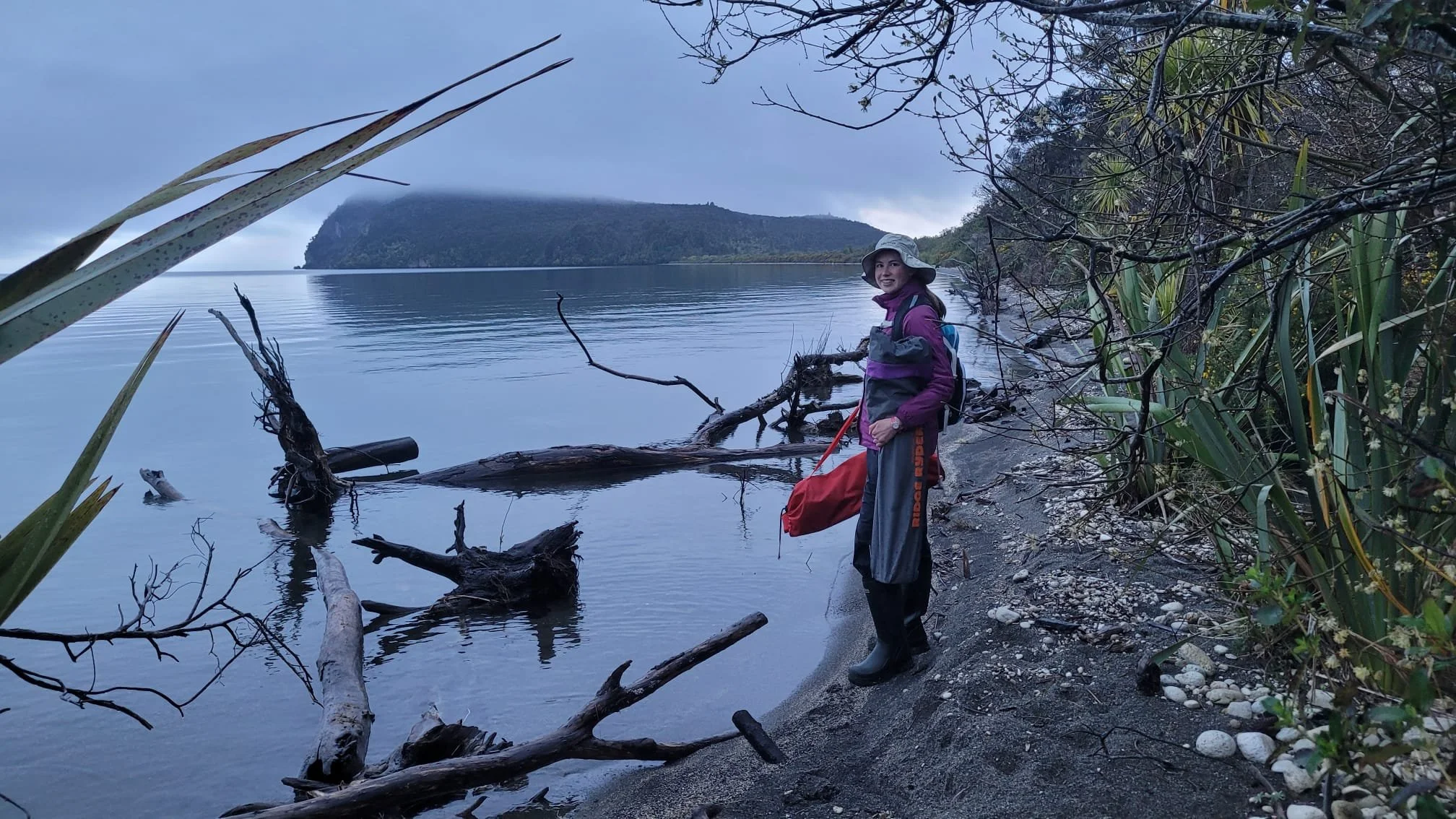
Bittern Monitoring
By Student Leader, Angela Schur, Year 12
Ever since I’d learnt about it, I’d been interested in bittern monitoring. I didn’t know much about Australasian bitterns | Matuku-hūrepo, but I knew some lived in the wetland near my home, and that they were quite elusive. So, I thought, “this will be cool”, and decided I’d like to join in the monitoring in October.
In order to align as close as possible with The Great Matuku Muster (the nationwide count of male bittern booming), the chosen dates to head out were the 1st, 2nd, and 3rd of the month - although the third evening was postponed to the 8th due to very rainy weather. The male bitterns ‘boom’ to establish their territory and attract a mate, most actively at dawn and dusk.
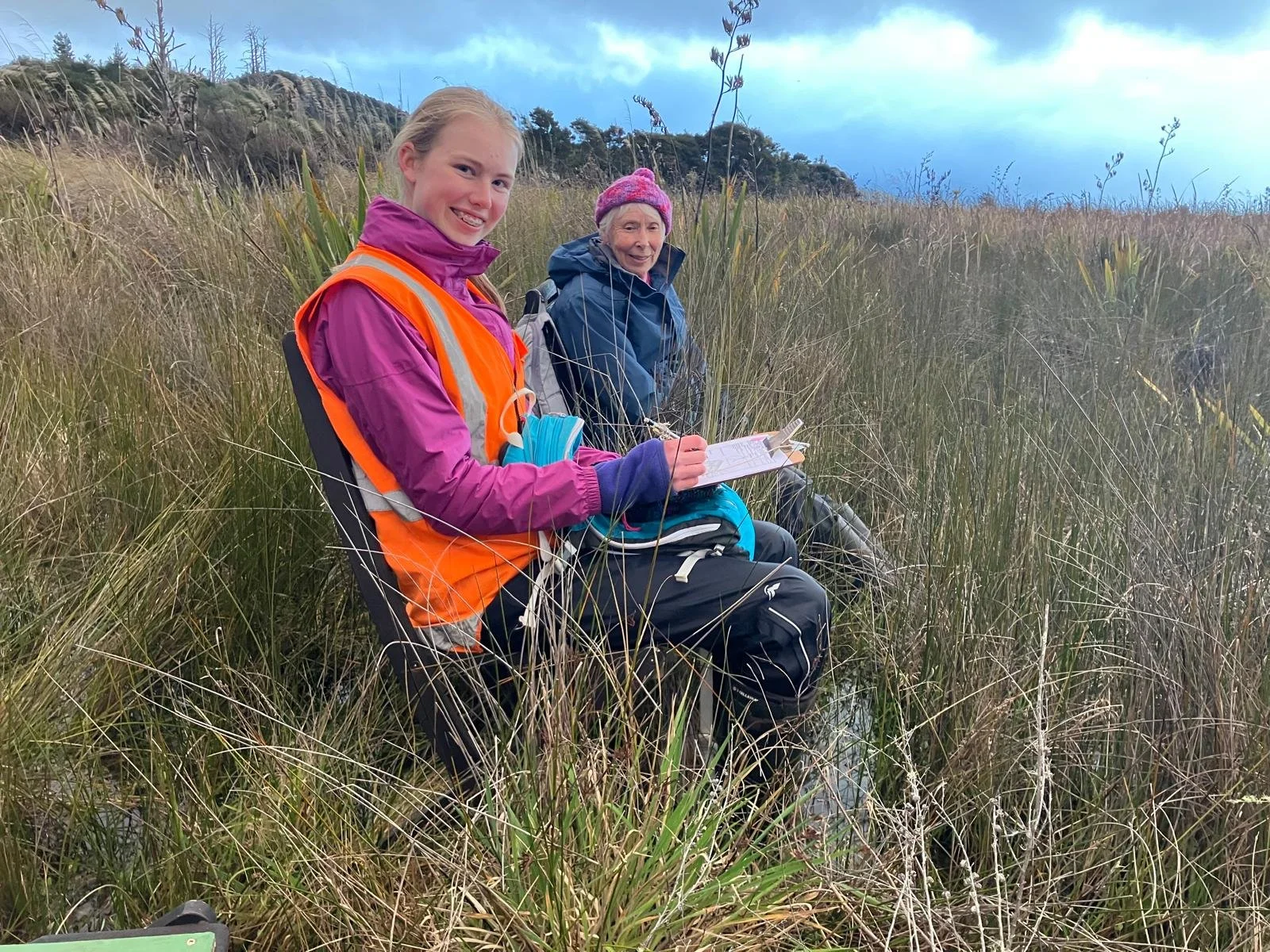
The first evening, Granny Rona and I went with Shirley Potter of Project Tongariro into the wetland. With our warm layers, camp chairs, and headlamps at the ready, we walked through the bush for about fifteen minutes before reaching the wetland. Once there, we decided the direction we’d face, how much cloud cover there looked to be, and what sort of background noise there may be. It turned out there was quite a bit from the forest behind us - the birds were singing loudly just before the sun went down! While we could still see without our headlamps, Shirley pointed out some pygmy mistletoe behind us - it is a partially parasitic plant, and grows on kānuka and mānuka.
Once the clock struck seven, we began recording any booms we heard. Some calls were loud and clear, but others led to some pondering - which direction did that come from? And how far away was it? There was barely time to record each call before another one came. There could be as few as 250 bitterns left in New Zealand, so it was a problem we were glad to have! As the sun went down, some geese loudly squawked past, and we put on our woolly hats. However, they were more of a hindrance than a help, as we had to keep our ears peeled for the booms. After an hour, it was time to head back: Granny Rona led the way, which was marked by reflective material which caught the light from our headlamps, so navigating through the dark bush was not a problem.
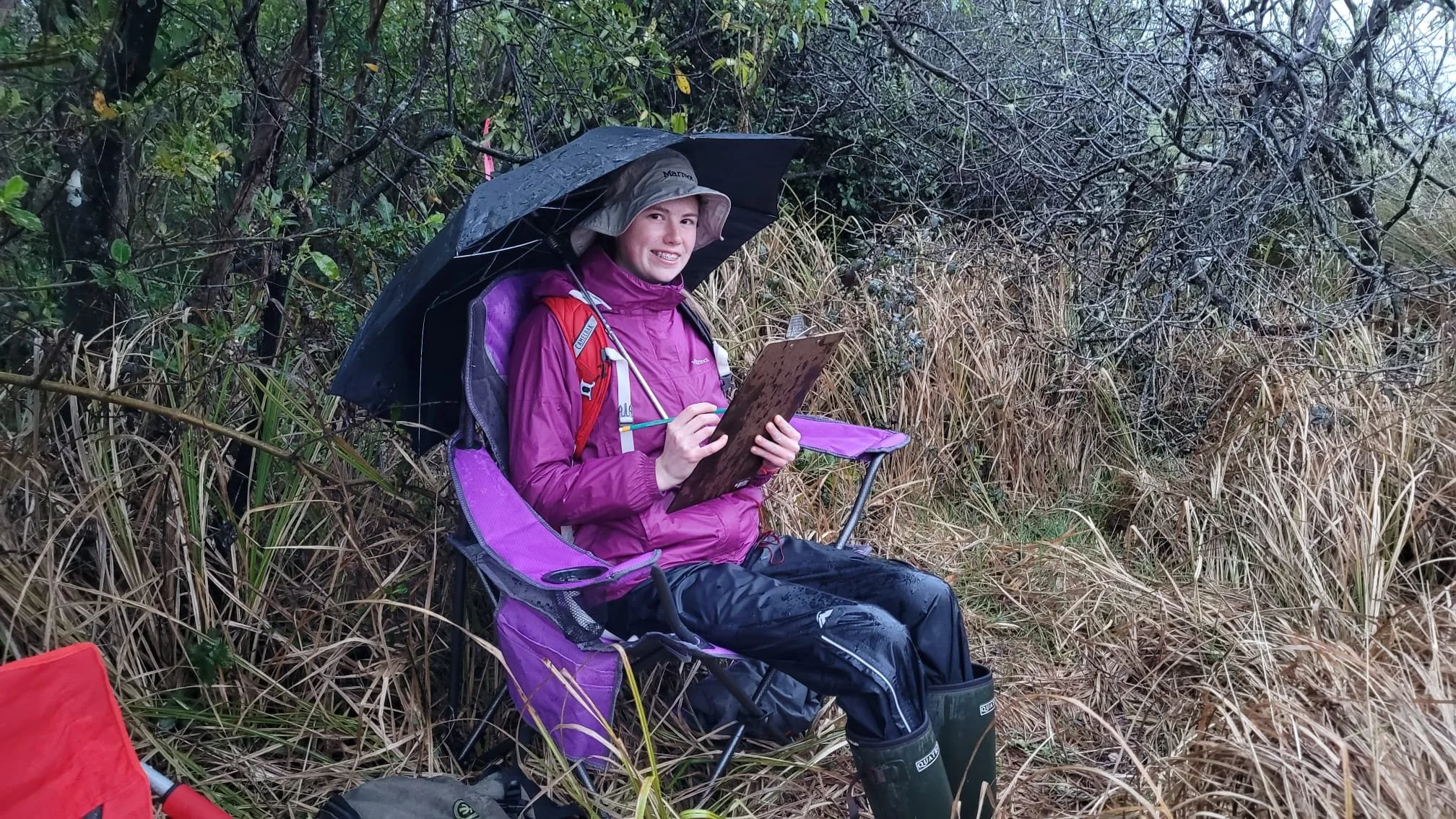
On the second evening, I joined Ardy from the Department of Conservation at a different site, near the Waimarino River. It was a bit of a longer walk to where we’d be based (or maybe it just felt that was because of the rain). We set up under a tree, and I sat with the (handily) waterproof paper under an umbrella. Every time a boom sounded, I wrote down the number of booms (usually three or four each time), and assigned it to the most likely bittern - most came from ones we’d decided to name ‘Tahi’ and ‘Rua’, who seemed to be having a conversation. We judged the bittern’s distance and direction from us, and I documented on paper whilst Ardy entered the data into the Bittern App from Love Bittern. By eight o’clock, it was time to head back. Thanks to the gumboots I’d borrowed, my feet were dry, but otherwise I was dripping from the rain, grateful for my waterproof layers.
The rain was even heavier the next night, so the third monitoring was postponed to the 8th of October. I went with Shirley again, to the same location as the first evening. I was careful not to lose a gumboot to the mud as I splashed through the shallow water with my chair. This time, there was very little cloud cover (which I happily noted), and we could see the sunset over the mountains. Geese, tūī, and ducks flew overhead, but no bitterns took flight. Somewhere in the wetland, we heard a fernbird too.
I had a lot of fun and am very glad that I was able to partake in the monitoring for bitterns. I learnt a lot about the local wetland area, the process of collecting data, and the bitterns themselves. As their conservation status is Threatened-Nationally Critical, it was very special to be busy trying to note down all their booming!