Taonga Species Celebrated to Inspire Freshwater Conservation
Kids Greening Taupō's freshwater education programme has continued to grow, using some of Aotearoa's most treasured taonga species to inspire tamariki to care for our rivers, wetlands, and lakes. While our key environmental messages remain the same—protecting freshwater through biosecurity, predator control, native planting, wetland restoration, and responsible pet ownership—we have found that students connect even more deeply when these concepts are explored through the stories of iconic native species.
This year, our education sessions focused on whio (blue duck) and matuku hūrepo (Australasian bittern). We were incredibly fortunate to borrow taxidermy specimens from the Department of Conservation (DOC), allowing students to see these remarkable birds up close. As with all of our education programmes, we have also developed accompanying presentations and free online resources for teachers, making it easy for schools to continue the learning back in the classroom.
Fantastic Whio!
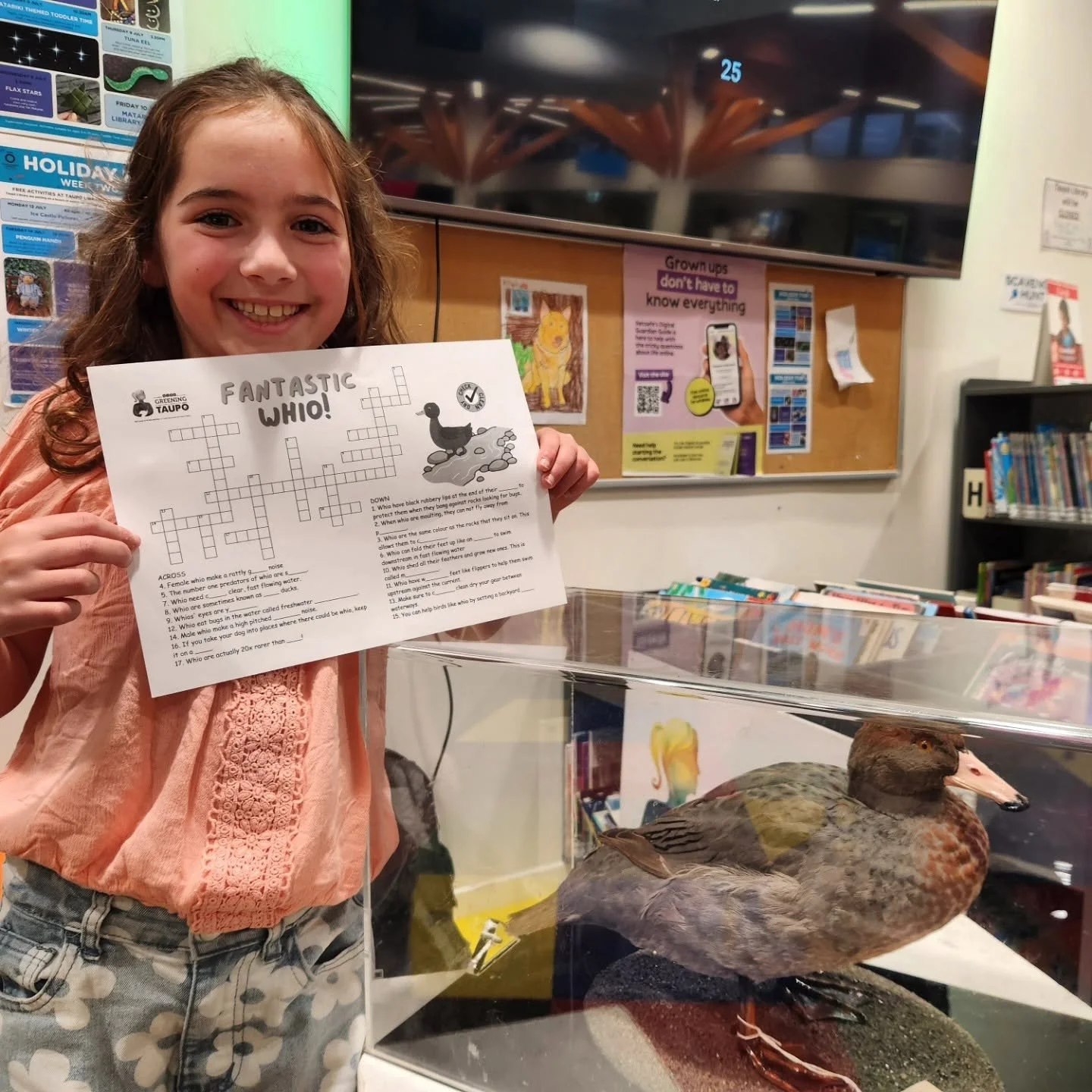
Download the crossword on our website and have a go at it!
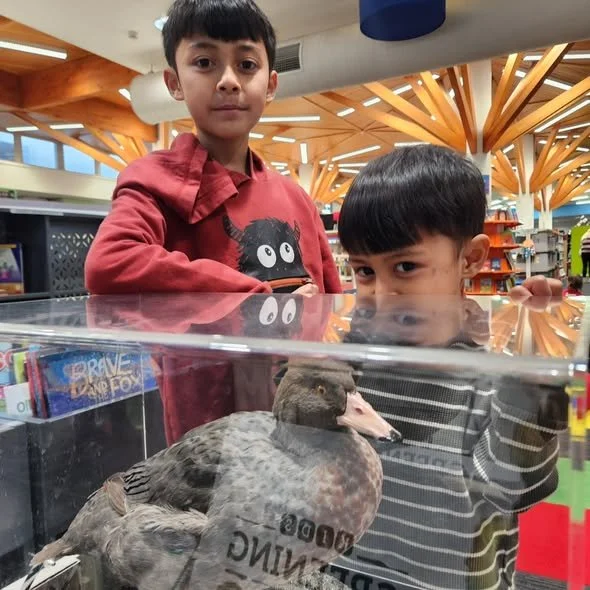
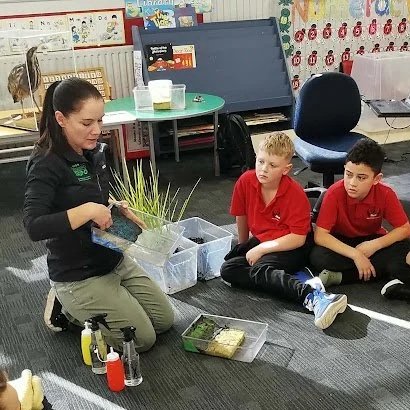
More than 50 tamariki joined us at Taupō Library for our Fantastic Whio! session, where they discovered why New Zealand's unique blue duck is one of our most remarkable—and most endangered—birds. Students were fascinated to learn that whio are around 20 times rarer than kiwi, with their survival depending on healthy, clean, clear, fast-flowing rivers.
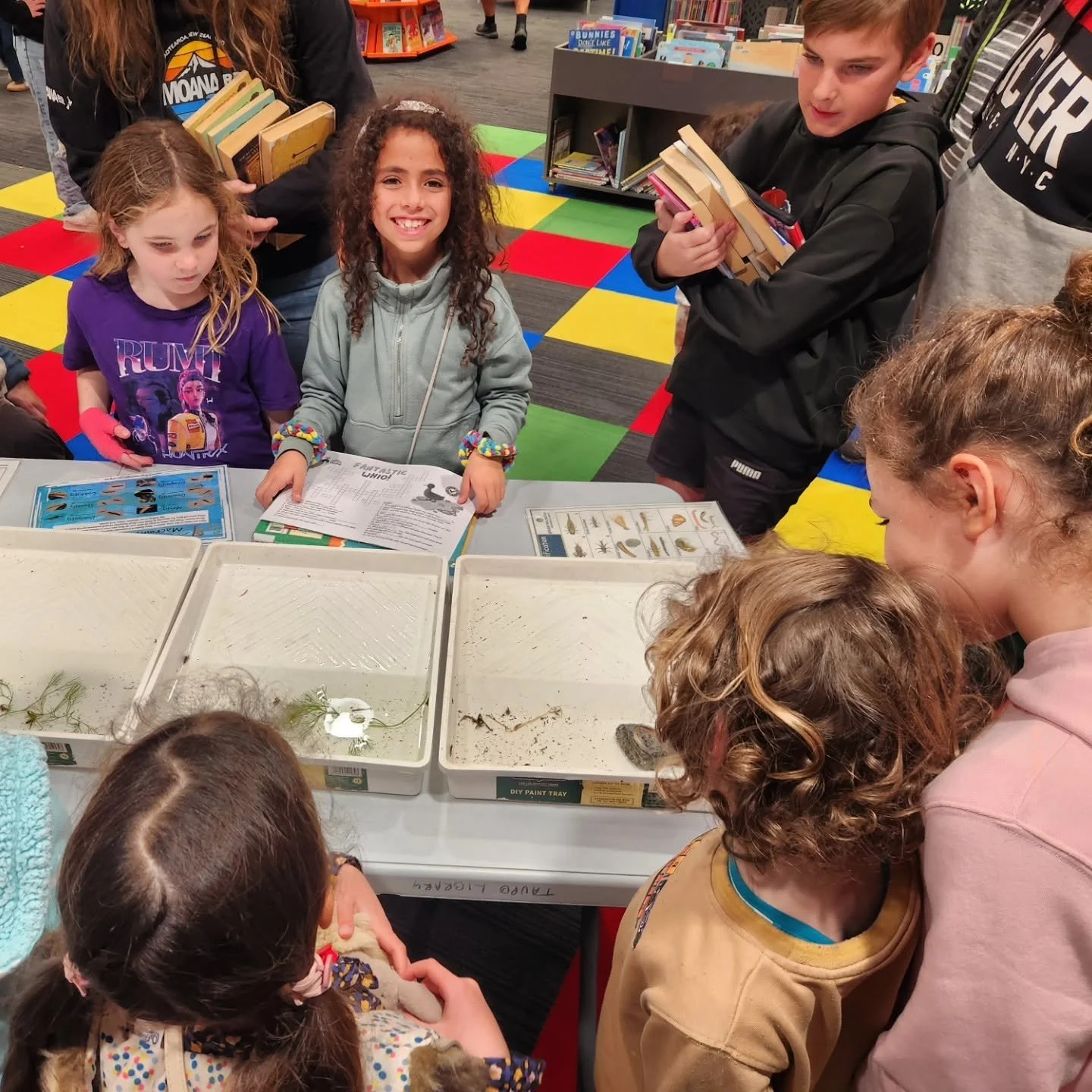
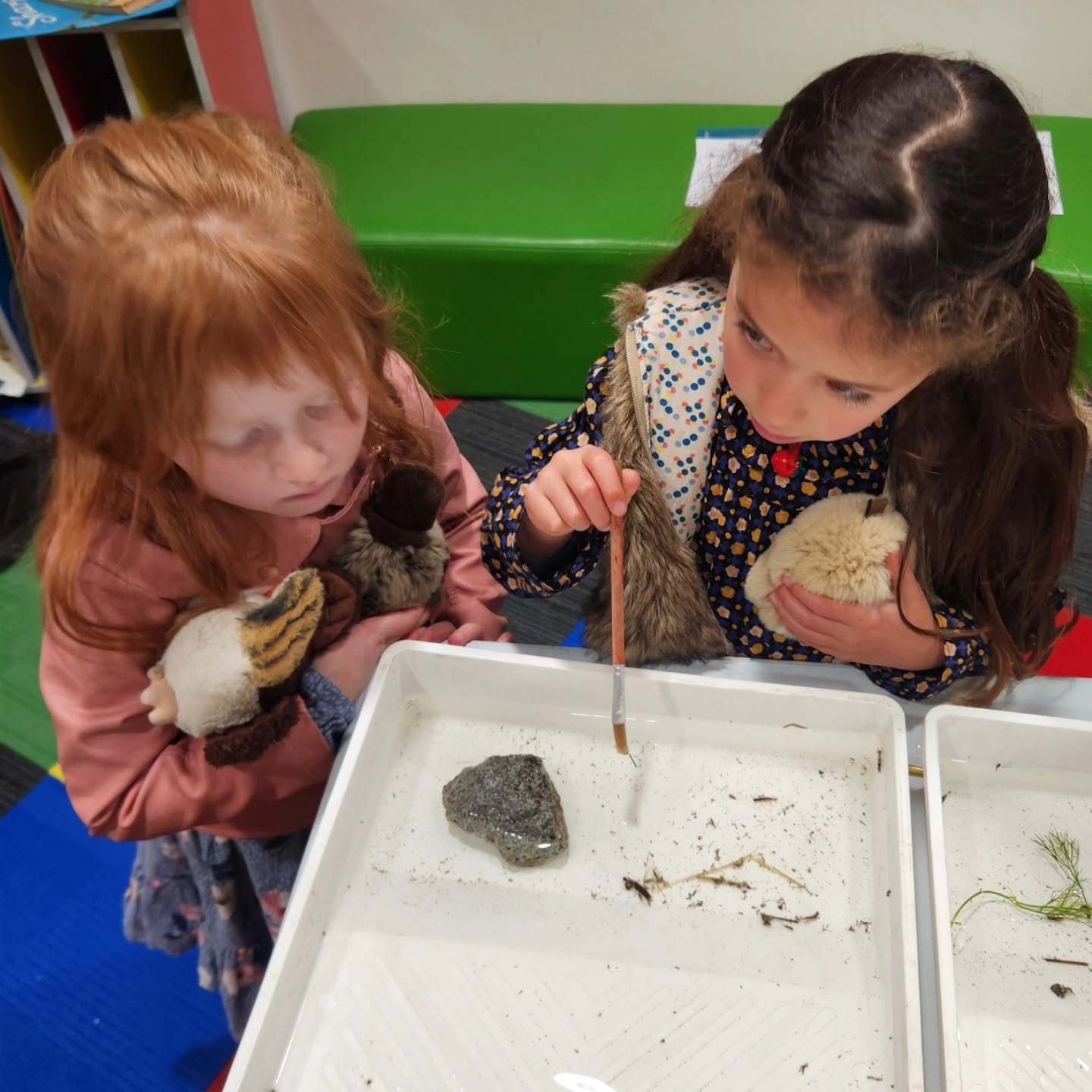
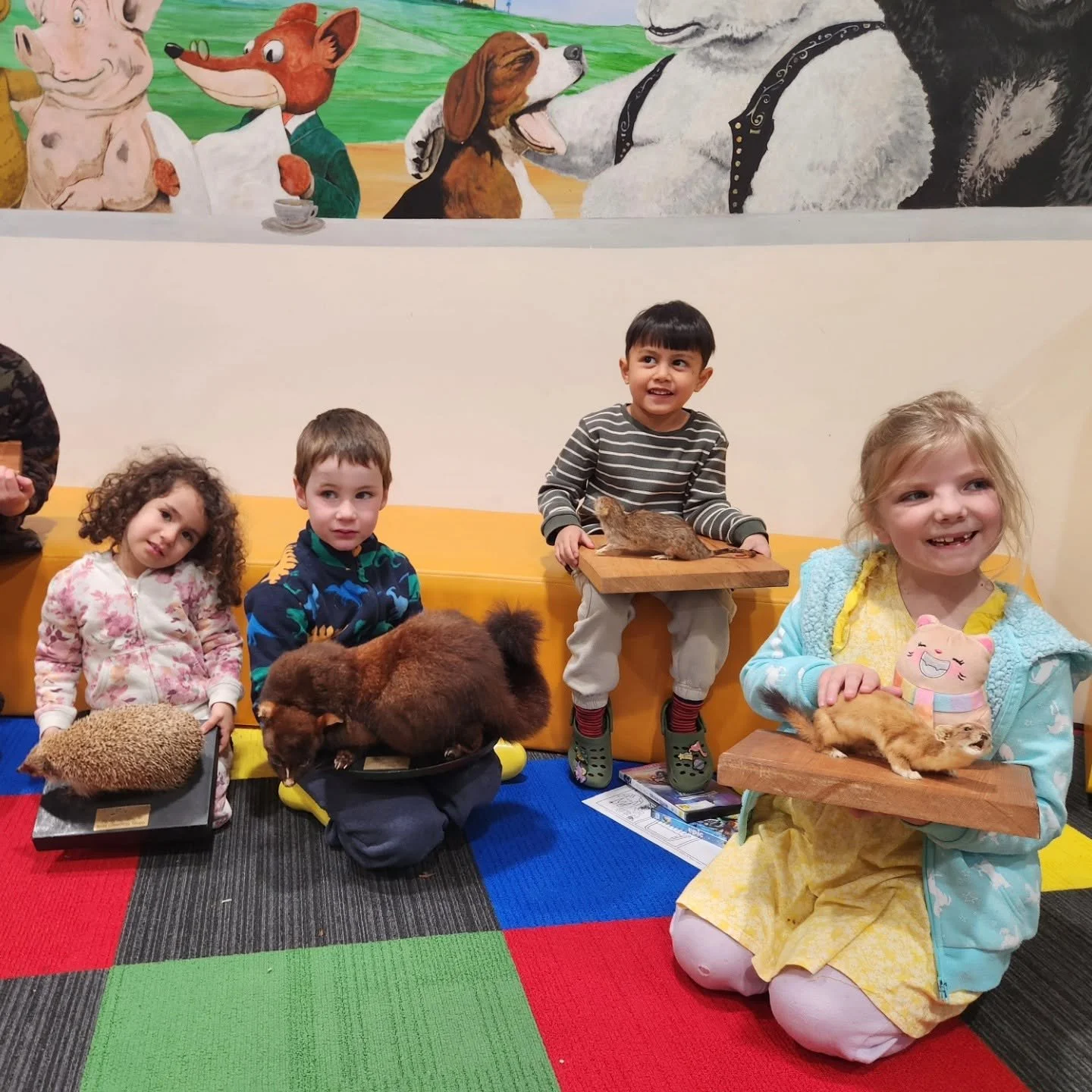
Thanks to the Department of Conservation, students were able to examine a taxidermy whio alongside some of its introduced predators, helping them understand why these birds are so vulnerable. They also investigated water samples, searching for freshwater macroinvertebrates—the tiny aquatic insects that make up much of a whio's diet.
The session reinforced an important message: everything in our freshwater ecosystems is connected. Healthy populations of freshwater macroinvertebrates depend on clean, cool, clear water, and in turn, healthy whio populations depend on abundant macroinvertebrates. Along the way, students also revisited ideas from previous sessions about freshwater biosecurity, Aotearoa's unique biodiversity, native planting, predator control, and the history of biodiversity in New Zealand.
We would like to thank the Department of Conservation for generously lending us the taxidermy whio and predator specimens, and Whio Forever for providing excellent teaching resources.
Learn more about our whio and print our crossword here
Celebrating Matuku Hūrepo
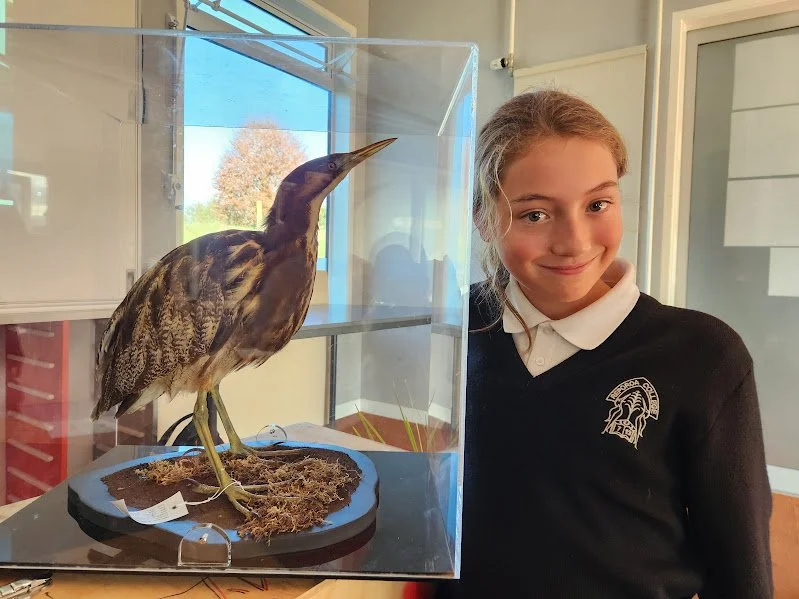
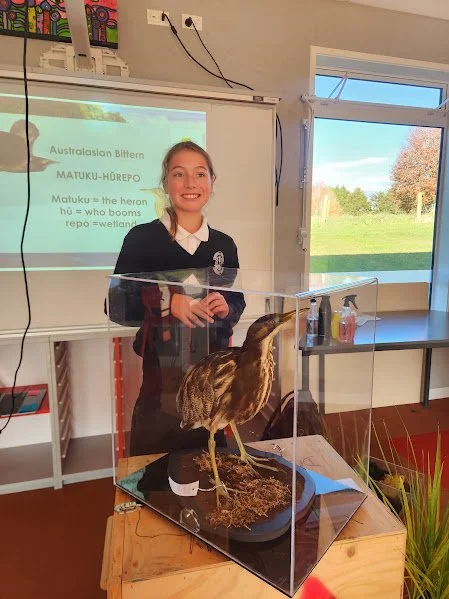
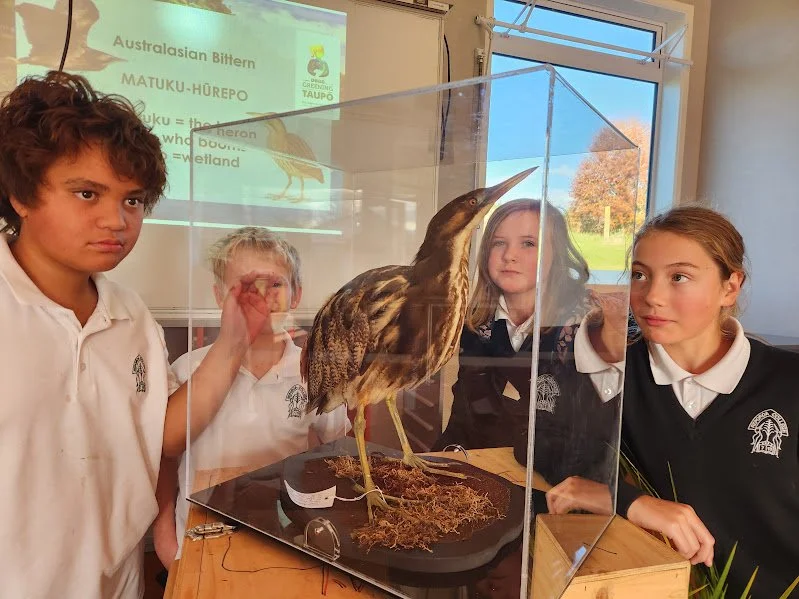
Check out the Reporoa College logo on her shirt! It is two matuku hūrepo with their beaks to the sky.
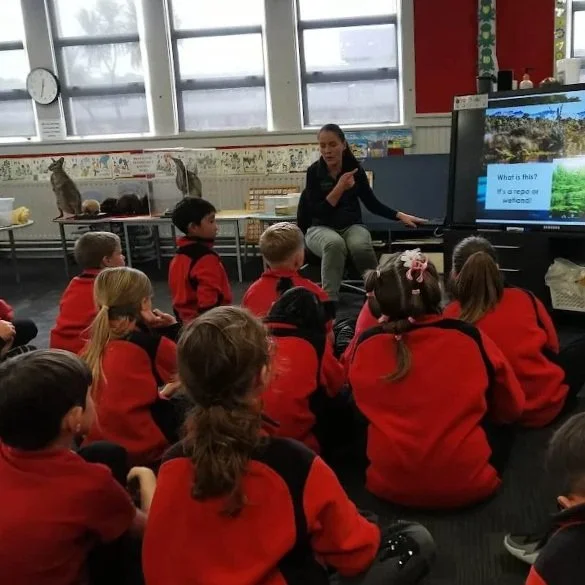
This year we also developed a new education programme centred on matuku hūrepo (Australasian bittern) and the importance of wetlands.
The programme was delivered to every class at Taupō Primary School and to schools in Reporoa. It was particularly meaningful for Reporoa, whose name translates as "long wetland", while Reporoa College's logo proudly features two bittern facing one another.
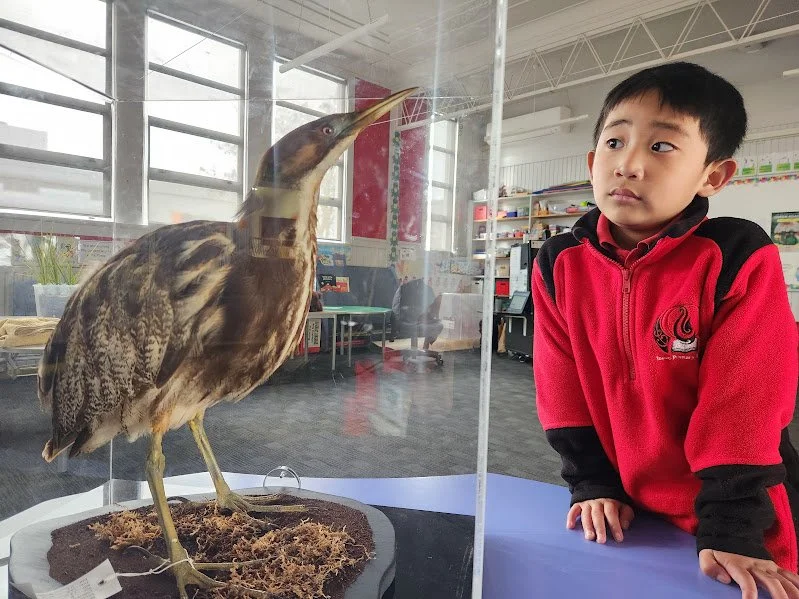
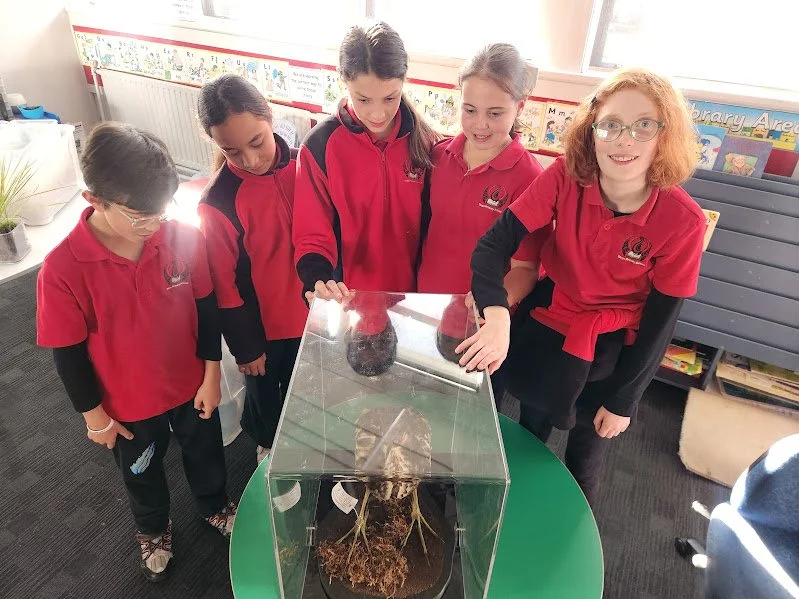
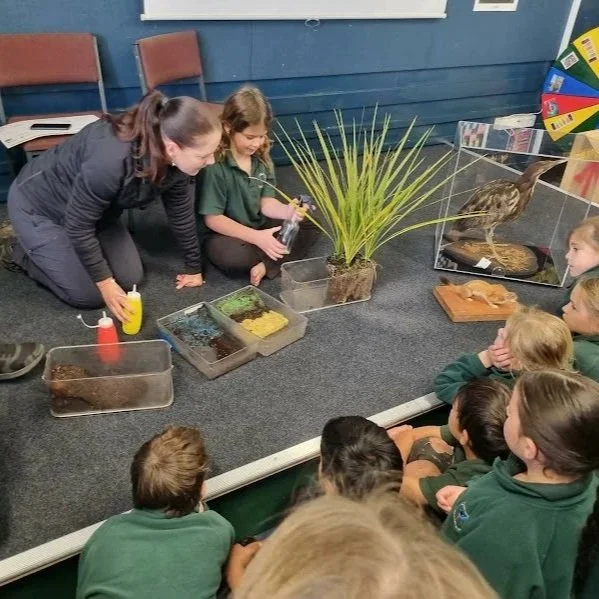
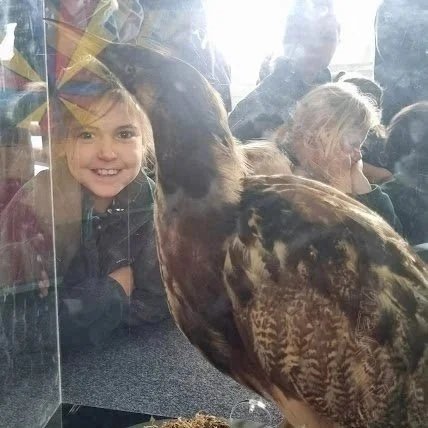
Students had the opportunity to see a taxidermy bittern, kindly loaned by the Department of Conservation, and took part in hands-on investigations exploring why wetlands are such vital ecosystems. Through these activities, they discovered the important role wetlands play in filtering water, reducing flooding, storing carbon, and providing habitat for some of New Zealand's rarest wildlife.
With fewer than 1,000 matuku hūrepo remaining in Aotearoa, students quickly recognised why these elusive birds need our help. The sessions also linked back to previous learning about freshwater ecosystems, Check, Clean, Dry, introduced predators, and the history of biodiversity in New Zealand.
A special thank you to Love Bittern for inspiring us to develop these sessions.
Print off our crossword and learn more about wetlands and bittern here
Looking After Our Freshwater Future
Although our sessions featured different taonga species, the conservation messages remained consistent. Whether students were learning about whio, matuku hūrepo, or freshwater macroinvertebrates, they discovered that protecting one species means protecting an entire ecosystem.
Throughout these programmes, tamariki explored why New Zealand's native wildlife is so unique, having evolved without mammalian predators, and why this makes many of our species especially vulnerable today. They learned the importance of restoring native forests and wetlands to replace lost habitat, reducing introduced predator numbers, practising freshwater biosecurity by following the Check, Clean, Dry protocol, remembering that "what goes down the grate goes into the lake," and being responsible pet owners.
By connecting these important environmental messages with inspiring taonga species, we hope to empower the next generation of kaitiaki to care for the precious freshwater ecosystems that make our region so special.